Families For Life | Conjunctivitis - Infants
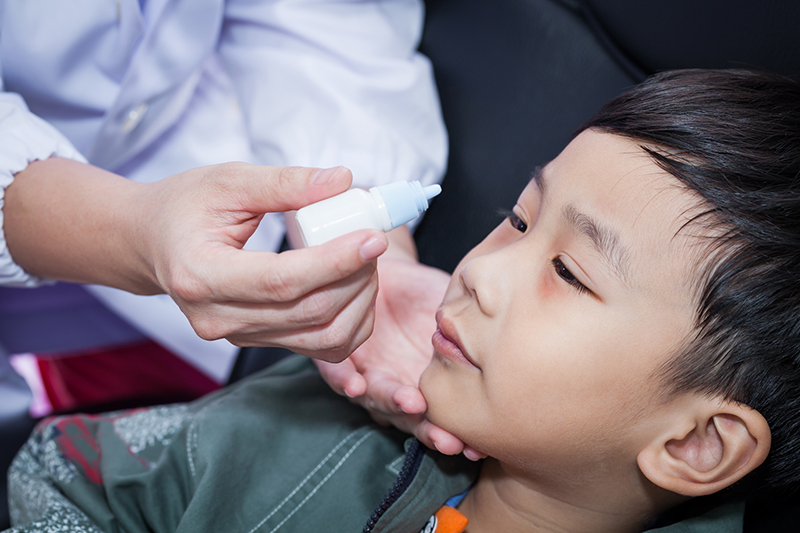
Conjunctivitis in Infants
Conjunctivitis refers to inflammation of the thin, translucent tissue (the "conjunctiva") that lines the white part of the
eye.
When the term conjunctivitis is used, it usually refers to "pink eye" or "sore eyes" – an infection of the conjunctiva usually due to a virus, or less commonly due to bacteria. In infants, bacterial conjunctivitis is actually more common than in older children and adults, and may sometimes be caused by bacteria transmitted during birth. Viral conjunctivitis is typically associated with flu-like symptoms and is extremely contagious. Fortunately, viral conjunctivitis will commonly recover on its own, although this may take anywhere from one to three weeks.
Other common causes of conjunctivitis in infants may include:
Allergies ("allergic conjunctivitis") – less common in very young infants, but may occur in those with underlying allergic disease such as eczema.
Blocked tear ducts ("nasolacrimal duct obstruction") – a common cause of persistent eye discharge in newborns and young infants, where the tear duct has not yet fully opened.
Blepharitis ("blepharoconjunctivitis") – due to excessive oiliness and inflammation of the eyelids.
Symptoms of Conjunctivitis in Infants
Your infant may show one or more of the following symptoms:
Redness of one or both eyesEye discharge – watery or stringy discharge, with sticky eyes on waking up in the mornings
Persistent apparent discomfort or irritability
Eyelid swelling or swelling of tissue surrounding the eye
Other symptoms may include a mild fever or runny nose
How to Prevent the Spread of Conjunctivitis
To prevent the spread of viral conjunctivitis to and from your infant:
Wash your hands thoroughly before and after touching your infant's eyes or face. The virus may be on your hands and may then spread to other family members when they touch the same surfaces.
Minimise touching of shared surfaces – such as tabletops, doorknobs, and telephones. Do not share towels, linen, pillows, and bedsheets, and do not share eye drops.
If possible, keep your infant away from childcare or playgroups until the eyes are no longer red, to avoid spreading the infection to other children.
Diagnosis of Conjunctivitis in Infants
Diagnosis is usually made by a family doctor or pediatrician based on the typical symptoms and an eye examination. Because conjunctivitis in newborns (known as neonatal conjunctivitis or ophthalmia neonatorum) can sometimes have more serious causes, it is important to seek medical attention promptly. If your infant's conjunctivitis does not recover, or if they experience frequent recurrent episodes, an examination by an ophthalmologist may be required to diagnose other forms of conjunctivitis.
Treatment for Conjunctivitis in Infants
Viral conjunctivitis is usually self-resolving and treatment is aimed at reducing discharge and discomfort until the eye recovers. Antibiotic eye drops or ointment may be prescribed if bacterial conjunctivitis is suspected, which is more common in infants than in adults. For conjunctivitis caused by a blocked tear duct, gentle massage of the tear duct area is often recommended and the condition typically resolves on its own as the infant grows.
Contributed by:
SingHealth (adapted)