Families For Life | Cradle Cap-Newborn
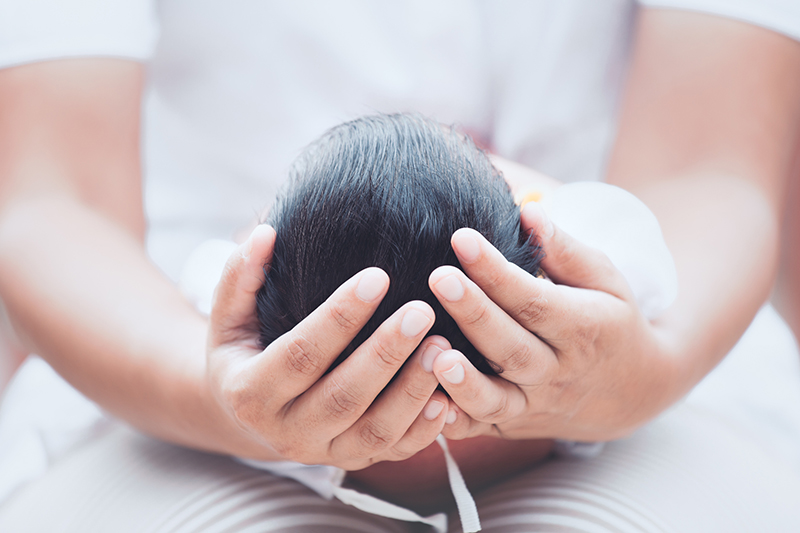
Cradle cap is a common skin condition which affects infants, typically appearing before 3 months of age. It is a form of seborrheic dermatitis, a condition caused by hyperactive oil glands due to circulating maternal hormones after birth. A natural yeast called Malassezia (Pityrosporum) grows in the increased oily secretion, resulting in inflammation (redness) and overproduction of skin cells (scaling).
Infants usually outgrow this condition by 6 to 12 months of age. Some babies with cradle cap will go on to develop atopic dermatitis (eczema), especially if there is a family history of eczema, allergic rhinitis (sensitive nose) or asthma.
Symptoms of Cradle Cap
Cradle cap causes the skin to be red, greasy, flaky, and itchy. It most commonly appears on the scalp as whitish, oily skin flakes. In more severe cases, the scalp can have dense, thick, adherent yellow scales and crust. It can also affect other areas of the skin rich in oil glands, such as the eyebrows, ears, back of the neck, and the diaper area.
How to Prevent Cradle Cap
While cradle cap is not always preventable, keeping your baby's scalp clean can help manage the condition. Wash your baby's hair regularly with a mild, tear-free baby shampoo. Avoid using heavily fragranced products on your baby's scalp, and opt for gentle, fragrance-free cleansers where possible.
Treatment for Cradle Cap
Cradle cap is generally mild and manageable at home. The following steps are recommended:
Wash your baby's hair daily with a mild, tear-free baby shampoo.
For babies with thick scales on the scalp, apply olive oil 30 minutes to 1 hour before rinsing off with shampoo. This helps to soften the scales.
If the scales do not loosen easily, use a soft brush or towel to gently remove them after softening.
Do not pick the scales, as this may increase the risk of infection.
For more severe cases, your doctor may recommend an anti-fungal shampoo, a mild steroid lotion, and a moisturiser.
If the rashes do not improve after a few weeks, please consult a doctor or paediatric dermatologist to reassess your child's condition.
Contributed by:
Singhealth (adapted)