Families For Life | Eczema-Newborn
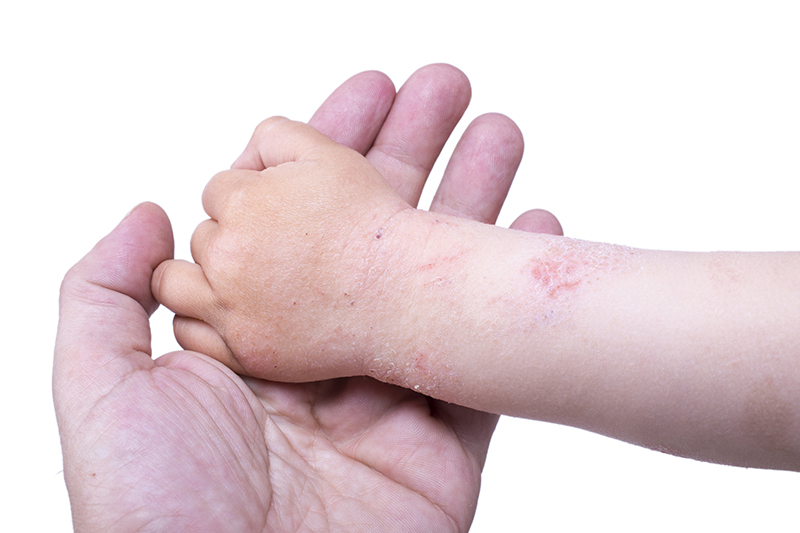
What is Atopic Dermatitis?
Atopic dermatitis, or eczema, is an itchy, dry inflammation of the skin. It is the most common type of skin disease in children and is not infectious. A child with atopic dermatitis has sensitive skin which is irritated easily.
Causes of Atopic Dermatitis in Infants
Atopic eczema is a genetic disorder associated with sensitive skin, and sufferers often have a family history of eczema, asthma or hay fever. There are many external factors that may aggravate eczema, but it is usually not caused by any specific allergy and allergy tests are not helpful.
The chlorinated water in swimming pools may irritate the skin, but seawater does not have this effect.
Signs of Atopic Eczema in Infants and Children
In most patients, eczema appears as redness, scaling and swelling on the face, limbs and trunk. The folds in the skin may be more severely affected. The condition is very itchy. Crusting may be present when eczema becomes infected.
Aggravating Factors in Eczema
Aggravating factors to avoid include:
Sudden changes of room temperature, strenuous exercise, and hot, humid weather
Synthetic or woollen clothing — children should be dressed in cotton
Emotional upsets
Frequent use of soaps, bubble bath, hot water — use mild soaps or soap substitutes like emulsifying ointment, and the temperature of the bathwater should be cool
Cigarette smoke — in an enclosed room, smokes and fumes irritate the skin, so it is best to ban smoking within the house
Dog and cat dander — all furry pets will aggravate eczema, so avoid keeping cats and dogs in the house
Irritant foods and saliva — acidic juice fruits such as oranges and tomatoes can cause eczema around the mouth; this is often made worse by lip licking and dribbling
Will My Child Grow Out of Eczema?
The tendency to sensitive skin will remain with your child into the teenage years. However, eczema will gradually improve as he/she gets older, and only a few people continue to have troublesome eczema in adult life.
Treatment of Your Child's Atopic Dermatitis
There is no single medication that will cure eczema. However, it is possible to control the condition effectively by using a simple treatment plan:
Emollients: these are products that moisturise and soften the skin. They help reduce itching and the desire to scratch, are safe and should be used frequently.
Topical steroid cream: using an appropriate topical steroid is safe and an essential part of treatment. Your doctor will advise you on the appropriate cream to use.
Anti-itch (antihistamine) medication: given an hour before bed, this will help the child settle and have a comfortable night's sleep.
Antibiotics: skin with eczema seems to attract certain bacteria. Antibiotics remove these bacteria and may improve eczema. Your doctor will advise you on whether antibiotics are needed.
Short nails: nails should be kept short to prevent excoriation (picking at the skin).
Contributed by:
HealthHub