Families For Life | Movement: Newborns
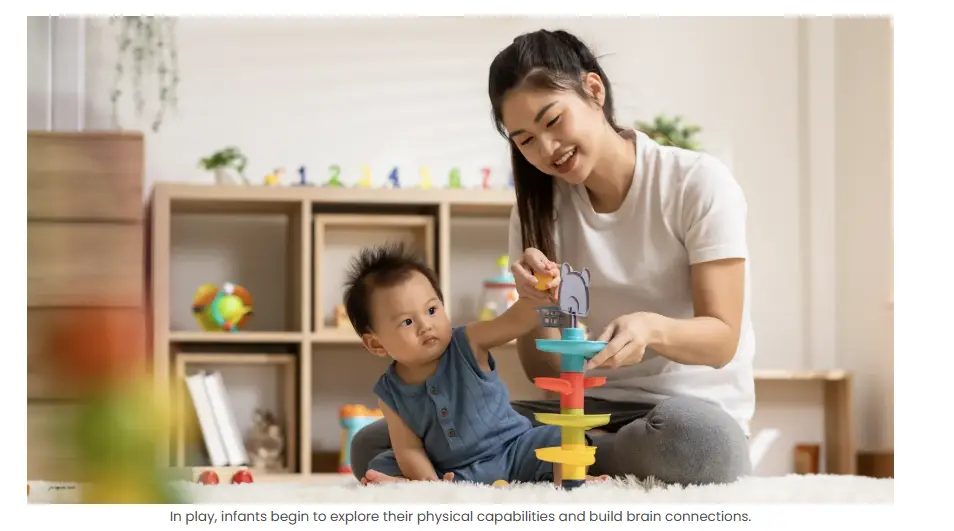
Growth and development within the first year of life is very rapid. Besides physical growth, your baby is learning all sorts of new skills during this stage. As parents, it is important that you are aware of these changes or acquired skills so that you can provide activities and a safe environment for your baby's brain development.
Growing Baby
Knowing the stages of development of your baby will help you react and respond in the right way, so as to help hone your child's development and skills.
An environment that encourages your child to explore things around him is important in his physical development. Be sure to allow your baby plenty of space for rolling and, eventually, crawling. Babies love to look at moving objects and try to reach for them, so be sure to hang mobiles and streamers safely in their space. Also, provide rattles and small toys that are easy to reach for and pick up, as babies like to experiment with objects. Make it a habit to disinfect the toys your baby puts in his mouth on a daily basis.
It's crucial to develop your baby's senses like sight, touch, hearing, smell and taste as he learns to discover his surroundings. Encourage your child to make comparisons by feeling and looking at them.
What to Expect
0-3 Months |
|
4-6 Months |
|
7-9 Months |
|
10-12 Months |
|
13-18 Months |
|
17-24 Months |
|
These developmental milestones are just a guide. Each baby is unique and his development may vary from others. So do not worry if your baby differs by a few months. What is important is that these milestones occur in a particular order. If you are concerned about the development of your child, talk about it with your child's doctor.
What You Can Do
Large muscles
During the first 6 months, your baby is developing his large muscles to raise his head, roll around, raise his arms and pull himself up, and even sit up without support. Encourage your baby to use and develop these large muscles by the following actions:
Move a light slowly across his field of vision from side to side so he will move his head to track the light. Try the same thing by moving your face.
Shake a rattle on one side and after he turns his head that direction, shake the rattle on the other side. Try the same thing with your voice.
Dangle objects for your three-month-old to reach out to grasp. Squeaky toys are popular with babies too.
Exercise his legs gently at playtime.
Small muscles
At around 6 months, your baby will start using his fingers more, learning to grasp objects handed to him. The developing muscles will also allow him to touch the fingers of one hand with the other, transfer toys from one hand to the other. His vision will soon be comparable to an adult's. Playtime should incorporate these actions when possible to encourage their development:
Give him rattles and squeaky toys to grasp when he is ready.
Teething rings are also handy because they are so easy to grasp.
As his grasp improves, begin to give him blocks to play with.
At 7 months, give him small finger foods to scoop up and eat. He will be trying hard to pick objects up with a pincer grasp (using his thumb and forefinger to hold a small object). As he becomes more accomplished, he'll be able to handle other finger foods. Remember he should always be seated and supervised while eating.
Begin to teach him some simple gestures by demonstrating them to him. He will pick them up and begin using them too.
Roll a ball to him and encourage him to roll it back.
Contributed by:
HealthHub