Families For Life | The Importance of Play (Toddlers)

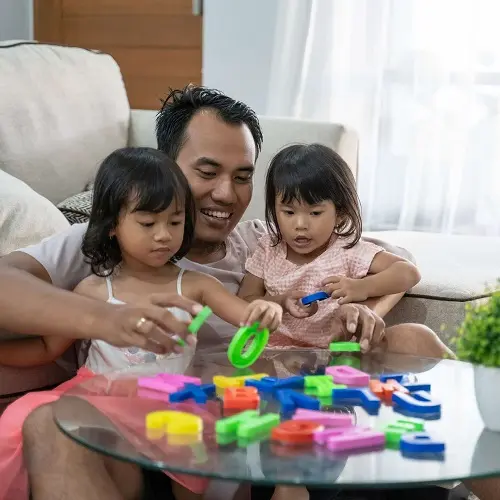
Remember: Your active involvement in your toddler's play isn't just about entertainment - it's about building their confidence, supporting their development, and strengthening your relationship with them. These early interactions lay the foundation for their future learning and growth.
Why Play Matters
Play is absolutely vital for your toddler's cognitive development - it's how they learn to think, understand, communicate, create memories, imagine, and predict what happens next. When you spend time playing with your toddler, you're not just having fun; you're sending them a powerful message: "You are important to me." This simple message helps them understand their place in the world and gives them the confidence to keep exploring and learning.
What to Expect from Your Toddler
Your little one is going through remarkable changes in how they think and learn. They'll start sorting objects by colour or size, follow simple instructions, and develop favourite books and songs. While they're incredibly curious, they still can't distinguish between reality and pretend - which explains why they might be scared of cartoon monsters or worry about monsters under their beds.
Your toddler is a natural explorer who finds wonder in the simplest things - from cracks in the pavement to birds in the park. They're driven by an intense curiosity to understand how things work, which explains why they might spend ages opening and closing drawers. This exploration, while sometimes challenging for parents, is crucial for their development.
Supporting Your Toddler's Learning Through Play
When you play together, you're helping them develop crucial thinking and problem-solving skills while strengthening your bond. Here are some effective ways to support their learning:
Create a safe space for exploration where they can touch, move, and experiment with different objects. Simple household items like plastic containers or wooden spoons can become valuable learning tools.
Make bath time educational by providing cups and containers for pouring and measuring. This introduces basic mathematical concepts in a fun way.
Read together daily, encouraging them to participate by asking what happens next in familiar stories. This builds memory and prediction skills.
Engage in conversations, even if they keep asking "Why?" Try turning the question back to them sometimes - "What do you think?" This helps develop their reasoning abilities.