Families For Life | Choking - First Aid - Toddlers
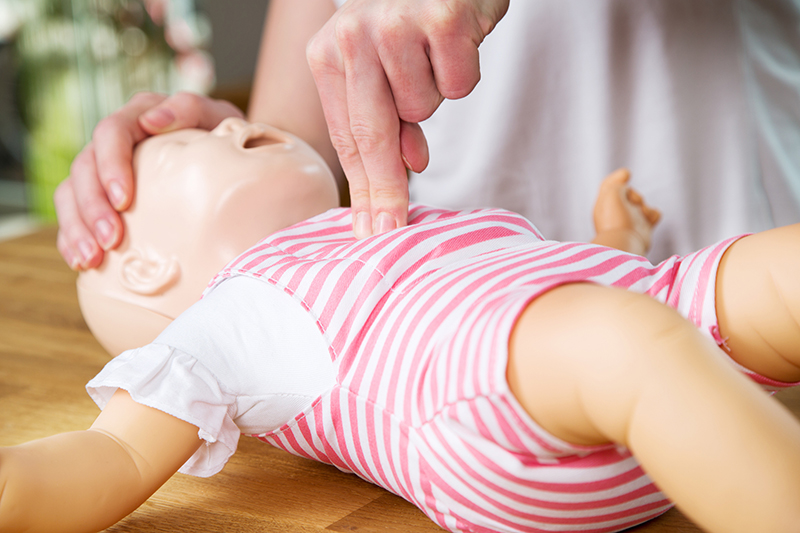
Choking is one of the four most common infant acute emergencies, besides burns, accidental drowning and swallowing of poisonous liquids.
Look out for three vital signs in a children's emergency:
The infant’s appearance, skin colour and breathing effort are indicators of the severity of the condition.
Get emergency help if you notice:
White, pale or mottled skin
Vacant, glassy-eyed stare
Listlessness and no response to stimuli such as the mother’s voice
Laborious breathing noises (e.g., grunting, wheezing or high-pitched whistling sounds)
Flared nostrils (shows that infant is trying very hard to breathe)
Choking can cause infant death if the trachea or windpipe is completely blocked.
What to do:
If the child is able to breathe and is coughing, let him cough the object out.
If the object is visible, remove it by scooping it out using a single finger. Do not attempt to remove it if you can’t visualise it. Blind sweep may cause object to lodge further inwards.
If the child is unable to talk or breathe normally, try dislodging the object from the trachea by doing the Heimlich manoeuvre – slapping five times between the infant’s shoulders (making sure the infant is facing downwards).
If the child shows no response, perform Cardiopulmonary Resuscitation (CPR) and call 995 for an ambulance.
Contributed by: HealthXChange