Families For Life | Preschoolers at Play

Learning Through Play at Their Own Pace
Expand your child's play activities in stages to support their development.
Through play, children learn and develop important life skills such as problem-solving, interacting and working with others. Understanding how children’s play evolves enables parents to provide activities that are developmentally appropriate and enjoyable.
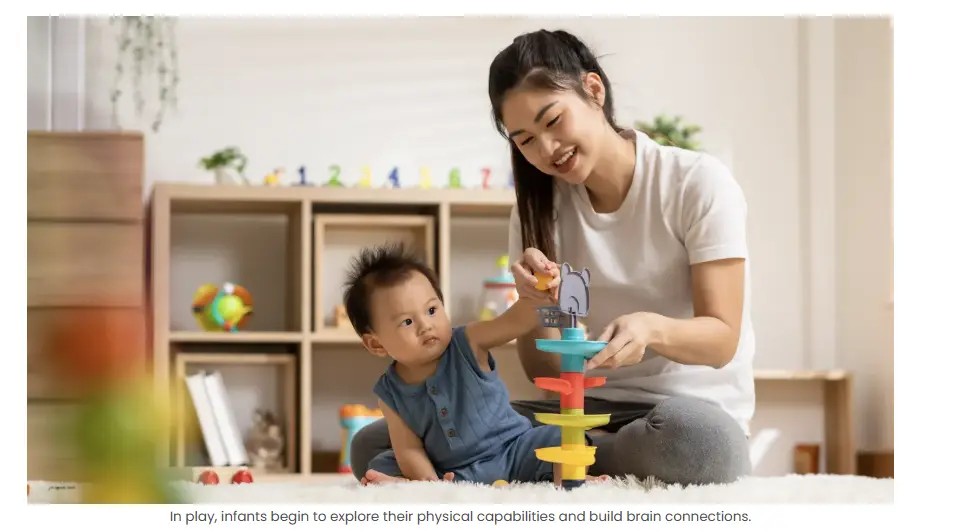
SOLITARY PLAY (AGES 0 TO 2)
A child plays alone and does not interact with others (e.g. playing with a toy or flipping through a board book by themselves).
TRY THIS: Provide objects in bright colours and in a variety of textures to engage your child’s senses and help them develop language and motor skills.
PARALLEL PLAY (AGES 2 TO 3)
A child plays next to or near others, with the same play materials, but does not talk to them (e.g. imitating what a playmate is doing). At this stage, the child observes and begins to pick up social cues and vocabulary.
TRY THIS: Provide art materials, or toys for water and sand play (e.g. scoops, containers). These items are suitable for both independent and group play.
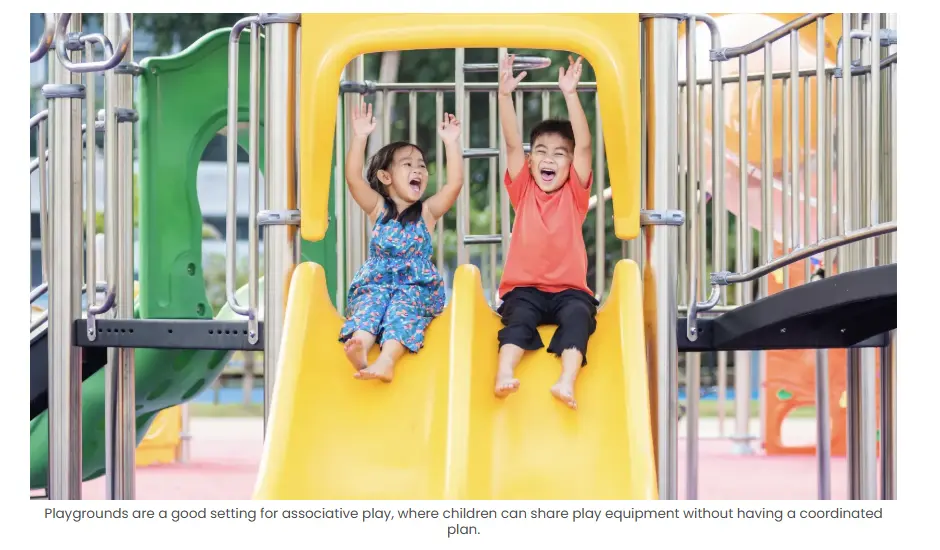
ASSOCIATIVE PLAY (AGES 3 TO 4)
A child plays side-by-side with others, with little interaction or coordination (e.g. playing at the same playground and talking to each other but doing different things). At this stage, the child is still focused on their own play but also engages with other children.
TRY THIS: Head outdoors, such as to a public playground or for a scavenger hunt in the park. This creates opportunities for your child to learn about sharing resources and turn-taking.
COOPERATIVE PLAY (AGES 4 TO 6)
A child plays together with others and collaborates on an activity (e.g. building a block tower together). At this stage, the child engages in teamwork, learns to understand the perspectives of others, and hones their self-control as well as language and communication skills.
TRY THIS: Arrange play dates for your child. Set up board games, music and movement activities, or pretend play ideas where children use props to act out different roles.
Contributed by: ECDA
Video: Skills Learnt Through Play
DID YOU KNOW?
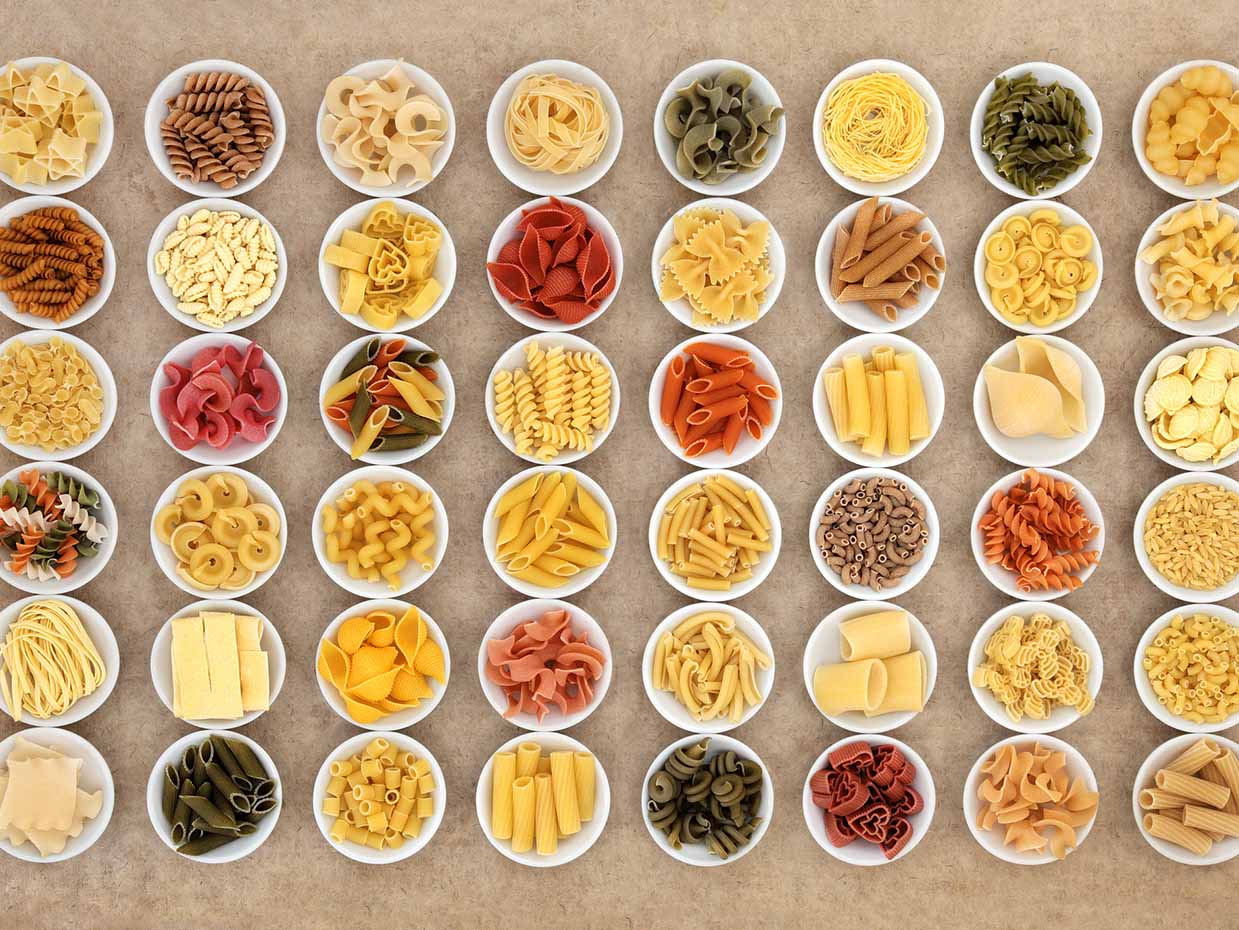
Playing with pasta pieces, especially macaroni, can be an excellent way to boost your child's acquisition of fine motor skills!
READ MORE